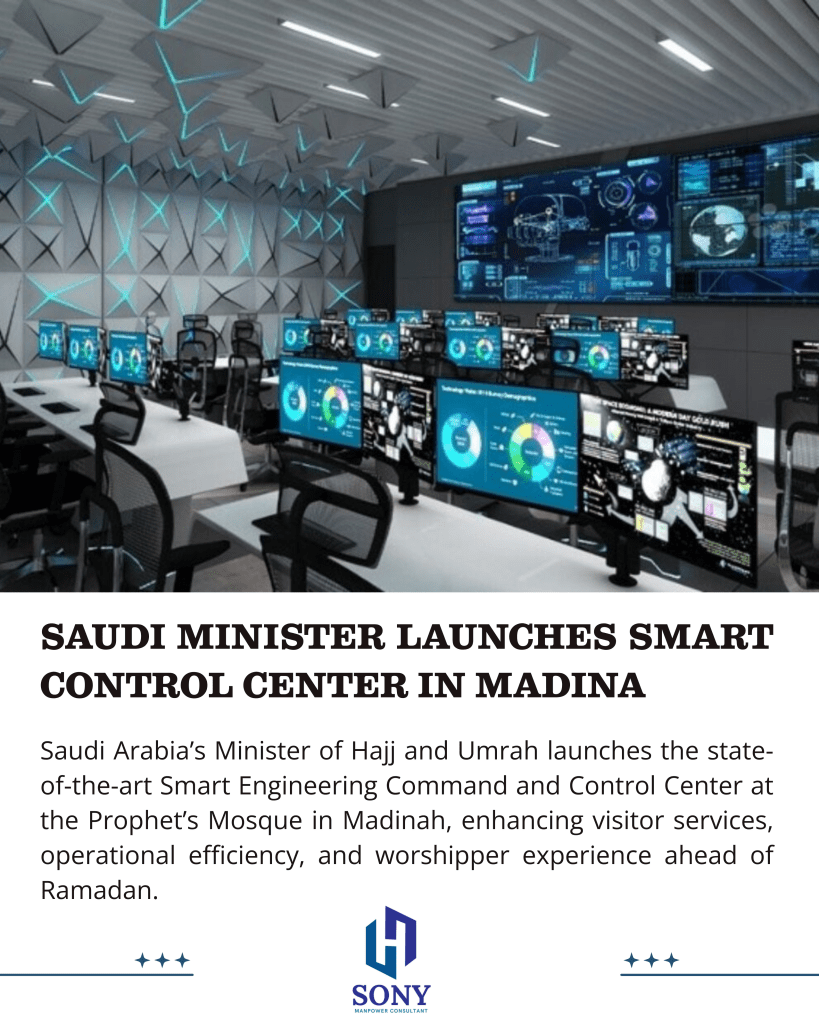
MADINAH: In a significant technological and operational advancement, Saudi Arabia’s Minister of Hajj and Umrah, Tawfiq Al-Rabiah, has officially launched the Smart Engineering Command and Control Center at the Prophet’s Mosque in Madinah. This landmark initiative is aimed at enhancing the experience of worshippers, improving operational efficiency, and ensuring seamless management of services, particularly during high-traffic periods such as Ramadan and Hajj.
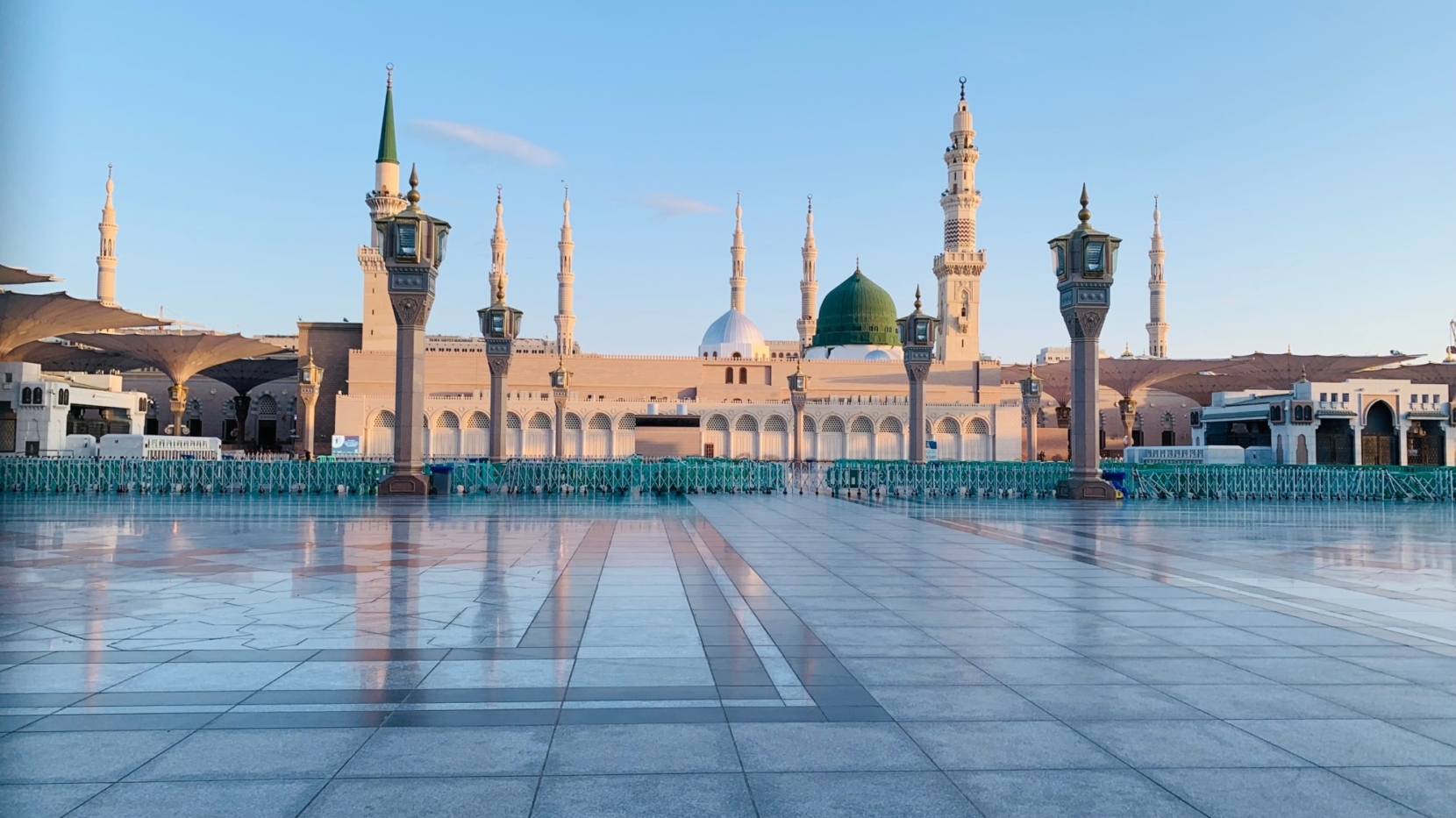
The launch ceremony was attended by Ghazi Al-Shahrani, CEO of the General Authority for the Affairs of the Grand Mosque and the Prophet’s Mosque, alongside senior executives and operational leaders responsible for overseeing service delivery at one of the most sacred sites in Islam.
The newly inaugurated Madinah Smart Control Center is being hailed as a transformative project that leverages advanced digital technologies to monitor, manage, and optimize the wide array of services provided to visitors at the Prophet’s Mosque.
Transforming Worshipper Experience Through Technology
The Smart Command and Control Center in Madinah represents a major step forward in the modernization of Prophet’s Mosque services. By integrating cutting-edge technologies with data-driven management systems, the center allows authorities to:
- Monitor operational activities in real time across all sections of the mosque.
- Respond quickly to incidents or service interruptions to maintain safety and comfort.
- Gather and analyze visitor feedback to continually improve service quality.
- Ensure compliance with health, safety, and operational standards.
This digital approach is designed to elevate the worshipper experience, offering a more organized, safe, and efficient environment for both daily visitors and seasonal crowds during holy periods.
Key Features of the Smart Engineering Command and Control Center

The center is equipped with interactive digital screens and advanced dashboards, which provide authorities with real-time operational data. Some of the core functionalities include:
1. Comprehensive Asset and Service Management
The system tracks critical assets throughout the mosque, ensuring that equipment, maintenance tools, and service facilities are fully operational at all times. It monitors cleaning operations, security systems, and crowd management measures, allowing staff to anticipate and address potential issues before they escalate.
2. Real-Time Visitor Feedback Integration
Worshippers’ opinions and feedback are collected via digital systems, enabling authorities to measure satisfaction levels and address complaints promptly. This ensures continuous service improvement and contributes to a more positive worshipper experience in Madinah.
3. Performance Analytics and Reporting
The control center uses digital performance indicators to track key metrics such as service delivery speed, operational efficiency, and response times. Historical, current, and predictive data are analyzed to create detailed analytical reports, which help managers make informed operational decisions.
4. Integration with External Entities
The center is linked with relevant government departments and service providers, ensuring a coordinated and holistic approach to operational management. This integration is particularly critical during Ramadan and Hajj, when the volume of visitors increases dramatically.
24/7 Operations for Maximum Efficiency
The Smart Control Center is staffed by a team of qualified professionals working in four shifts, enabling round-the-clock monitoring and operational support. This ensures that any issues, from minor maintenance problems to major security incidents, are addressed swiftly and efficiently.
By maintaining continuous operational oversight, the center plays a crucial role in crowd management, emergency response, and service optimization, creating a safer and more enjoyable environment for worshippers.
Preparing for Peak Periods: Ramadan and Hajj

The Prophet’s Mosque sees millions of visitors during Ramadan and Hajj, placing extraordinary demands on service infrastructure. The Smart Control Center in Madinah is specifically designed to manage these peak periods using:
- Key performance indicators (KPIs) to monitor critical operations.
- Subsidiary performance indicators (SPIs) to ensure the efficiency of support services.
- Predictive analytics to anticipate visitor flows and operational needs.
This approach allows the authorities to proactively address bottlenecks, optimize resource allocation, and maintain a smooth flow of visitors across the mosque premises.
Enhancing Operational Governance
The launch of the control center also strengthens operational governance by enabling digital oversight of all service operations. Key benefits include:
- Accurate performance tracking for every department and service unit.
- Data-driven decision-making based on historical trends and predictive modeling.
- Real-time monitoring for immediate corrective actions.
By using technology to enforce accountability and transparency, the center ensures that all services at the Prophet’s Mosque maintain high standards at all times.
Vision for the Future of Religious Services
The Smart Engineering Command and Control Center reflects Saudi Arabia’s broader vision of digitally transforming religious services. The Ministry of Hajj and Umrah aims to leverage technology to improve safety, efficiency, and visitor satisfaction, aligning with the Kingdom’s goals under Vision 2030.
Through advanced monitoring systems, integrated operations, and predictive analytics, the center represents a new era of smart management for one of Islam’s holiest sites. Worshippers can now benefit from:
- Faster service response times
- Improved safety and security measures
- More efficient crowd and traffic management
- Higher overall satisfaction with mosque services
Global Benchmark in Smart Religious Infrastructure
The Madinah Smart Control Center positions Saudi Arabia as a global leader in smart religious infrastructure. By combining innovative technology with operational excellence, the Kingdom sets a standard for other religious and cultural sites worldwide.
The center’s ability to operate continuously, adapt to fluctuating visitor volumes, and integrate data from multiple sources ensures that the Prophet’s Mosque remains a model of efficiency and visitor-centered services.
Final Words:
The launch of the Smart Engineering Command and Control Center at the Prophet’s Mosque marks a significant milestone in Saudi Arabia’s ongoing efforts to modernize Prophet’s Mosque services and enhance the worshipper experience in Madinah. By harnessing cutting-edge technology, data analytics, and 24/7 operational support, the center ensures that visitors enjoy safe, organized, and efficient services throughout the year, particularly during Ramadan and Hajj.
This initiative underscores the Kingdom’s commitment to innovation, excellence, and world-class service delivery, providing a blueprint for the future of religious service management globally.
FAQs: Smart Engineering Command and Control Center – Prophet’s Mosque, Madinah
1. What is the Smart Engineering Command and Control Center in Madinah?
The Smart Engineering Command and Control Center is a state-of-the-art facility launched at the Prophet’s Mosque to monitor, manage, and enhance all operational services using advanced digital technologies and real-time data systems.
2. Who inaugurated the Madinah Smart Control Center?
The center was officially inaugurated by Saudi Arabia’s Minister of Hajj and Umrah, Tawfiq Al-Rabiah, in the presence of Ghazi Al-Shahrani, CEO of the General Authority for the Affairs of the Grand Mosque and the Prophet’s Mosque, along with senior officials.
3. What are the main objectives of the Smart Control Center?
The center aims to improve operational efficiency, ensure safety, optimize service delivery, and enhance the overall worshipper experience at the Prophet’s Mosque, especially during peak periods like Ramadan and Hajj.
4. How does the center improve visitor services at the Prophet’s Mosque?
By using interactive dashboards, real-time monitoring, visitor feedback systems, and predictive analytics, the center ensures prompt responses to issues, efficient crowd management, and seamless service delivery.
5. Does the center operate 24/7?
Yes, the center operates 24 hours a day, 7 days a week, staffed by qualified personnel working in four shifts to ensure continuous monitoring and rapid handling of operational requirements.
6. How does the center handle peak periods like Ramadan and Hajj?
During peak periods, the center uses key and subsidiary performance indicators, predictive data, and resource optimization strategies to manage large crowds and ensure all services run smoothly without disruption.
7. What technologies are used in the Smart Control Center?
The center integrates digital dashboards, interactive screens, data analytics tools, and real-time reporting systems to monitor assets, services, visitor feedback, compliance, and operational performance efficiently.
8. How does the center enhance safety and security?
By providing real-time monitoring of crowd movements, emergency response coordination, and integration with security services, the center ensures the safety of visitors while maintaining organized operations across the mosque.
9. Can the center track visitor satisfaction?
Yes, the center collects and analyzes visitor feedback in real-time, allowing the authorities to identify issues, implement improvements, and enhance the overall worshipper experience in Madinah.
10. What is the significance of the Smart Control Center for Saudi Arabia’s Vision 2030?
The center aligns with Saudi Arabia’s Vision 2030, aiming to digitally transform religious service management, modernize infrastructure, and provide world-class experiences for pilgrims and visitors at the Prophet’s Mosque and other holy sites.
More Links :
Top Recruitment Agencies In Pakistan For Saudi Arabia Recruitment